
Add MobiGyaan as a preferred source on Google
Truecaller has raised concerns over the Telecom Regulatory Authority of India’s (TRAI) decision to whitelist 140 and 1600 series commercial numbers, claiming the move has resulted in consumers increasingly ignoring and manually blocking these calls despite the regulator’s efforts to improve trust in commercial communications.
According to Truecaller, Indian users now ignore over 5.1 crore calls from these number series every day and manually block nearly 5 lakh such numbers daily, highlighting what the company describes as growing consumer frustration.

What Are The 140 & 1600 Series Numbers?
The 140 and 1600 number series were introduced by TRAI under the Telecom Commercial Communications Customer Preference Regulations (TCCCPR) finalized in February 2025.
The dedicated prefixes are intended to help users distinguish between different categories of commercial calls:
- 140 series – Promotional and telemarketing calls
- 1600 series – Service calls from banks, financial institutions, insurers, and other regulated entities
Banks, NBFCs, mutual funds, and insurance companies were directed to migrate to these dedicated number series by early 2026.
TRAI Required Caller ID Apps to Whitelist These Numbers
According to Truecaller, TRAI subsequently instructed caller identification platforms, including Truecaller, Hiya, and similar apps, to whitelist all 140 and 1600 series numbers.
As a result, these apps can no longer display spam labels, community warnings, or automatically block calls originating from these number ranges, regardless of how many users have reported them as spam.
Truecaller said it complied with the directive while expressing concerns that the policy could ultimately reduce consumer trust.
Consumers Are Increasingly Ignoring These Calls
Eight months after the policy was implemented, Truecaller shared data indicating a significant decline in user engagement with these calls.
According to the company:
- 81% of all 140-series calls go unanswered
- 79% of 1600-series calls are ignored
- More than 5.1 crore calls from these ranges remain unanswered every day
Manual blocking has also increased substantially.
Truecaller said users now block approximately:
- 4 lakh 140-series numbers daily
- 1.25 lakh 1600-series numbers daily
The company added that users have performed 7.4 crore blocking actions since October 2025, while daily blocking of 1600-series numbers has increased by 208% during the same period.
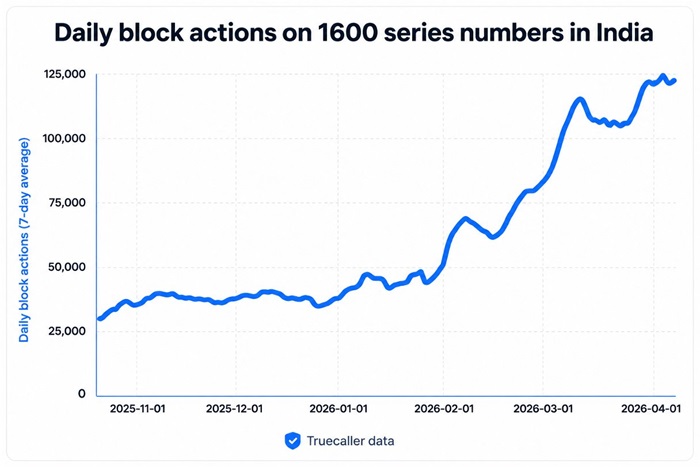
Truecaller Says Misuse is Driving the Problem
According to Truecaller, the issue stems from organizations using 1600-series numbers for promotional calls instead of genuine service-related communications.
The company said the number series was originally intended for activities such as:
- Fraud alerts
- Transaction confirmations
- Account notifications
However, it claims many financial institutions are also using these numbers to promote:
- Credit cards
- Personal loans
- Insurance products
Since the numbers are whitelisted, users do not see spam warnings even if the same numbers have received thousands of community spam reports.
TRAI Seeks Broader Authority Over Caller ID Apps
Truecaller also highlighted TRAI’s latest proposals regarding caller ID applications.
According to the company, TRAI has requested to be designated as an authorised agency under the Information Technology Act, which would provide greater oversight over caller ID platforms.
The draft amendments also reportedly propose restrictions on apps that block, filter, or tag designated commercial numbers, while requiring certain spam detection information to be shared with telecom operators.
Industry Bodies Oppose the Proposal
The Internet and Mobile Association of India (IAMAI) has opposed the proposed changes.
According to IAMAI, caller ID applications are governed under the Information Technology Act rather than telecom regulations. The association also expressed concerns about proposals requiring companies to share proprietary spam detection data with telecom operators.
Truecaller CEO Responds
Responding to the developments, Truecaller CEO Rishit Jhunjhunwala on X (Formerly Twitter), said, “We are the good actors who are helping hundreds of millions of Indians every day, including the vulnerable elderly, to have a trusted communication experience. Instead, they want to enable bad actors and give them an open playground to spam and scam us by censoring community information. We find this unacceptable. Penalize the bad actors, not the ones like Truecaller that make a significant positive impact.”
He argued that community-generated spam information helps consumers make informed decisions before answering calls and warned that removing this visibility could make it easier for spammers to reach users.
The Larger Challenge
TRAI introduced the Do Not Disturb (DND) registry in 2010 to reduce unwanted commercial communications. While registered telemarketers can face penalties for violating DND rules, Truecaller argues that spam activity has increasingly shifted to ordinary mobile numbers, making community-driven caller identification services an important layer of protection.
The company maintains that addressing misuse by businesses making promotional calls through designated service numbers would be more effective than restricting caller ID applications that provide spam information to users.

