

Add MobiGyaan as a preferred source on Google
Indian telecom operator Jio has outlined its ambitions for next-generation connectivity, saying India could be among the first countries to roll out 6G once global standards are finalized in 2030. The company has already developed its pre-6G stack and Giga MIMO Radio, both of which are being showcased at the India Mobile Congress (IMC) 2026 in New Delhi.
According to Jio, 6G networks could deliver up to 5x higher network capacity and nearly 10x lower latency compared with current 5G networks. The technology is expected to support more simultaneous connections, faster responses, and new applications involving real-time AI, holographic video, healthcare, education, and other digital services.
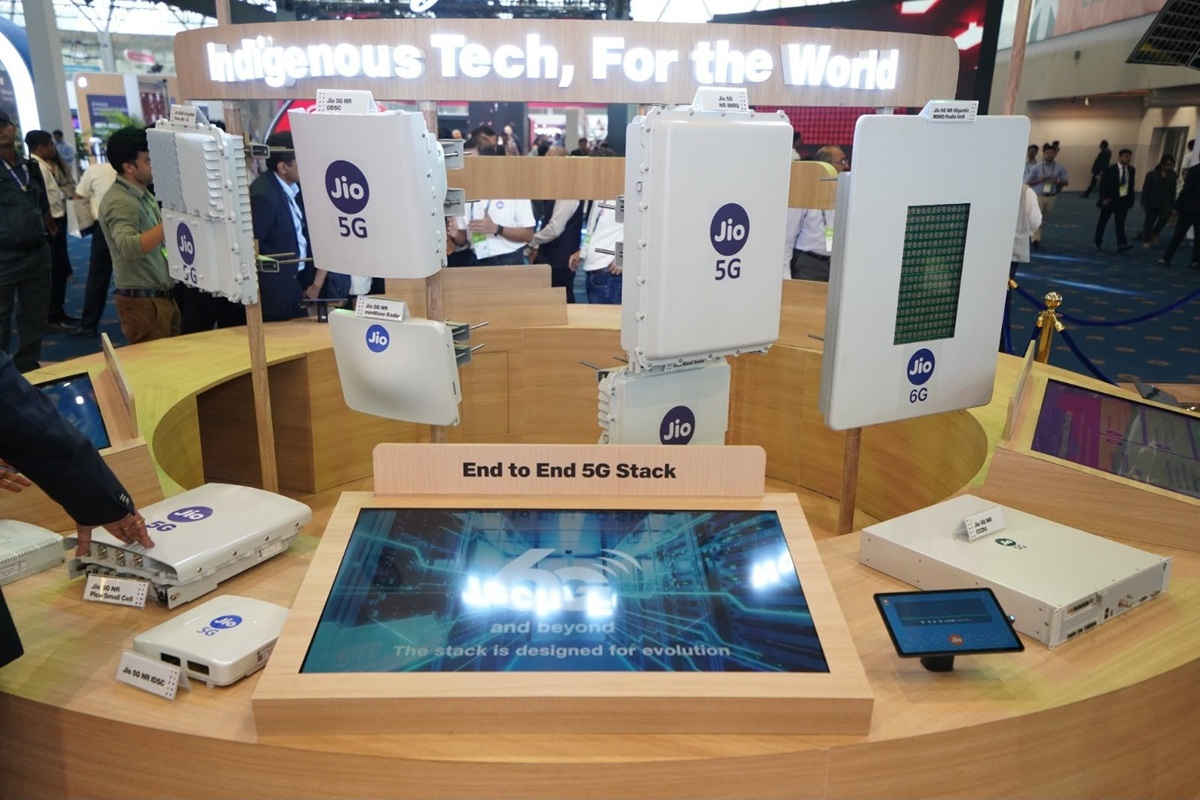
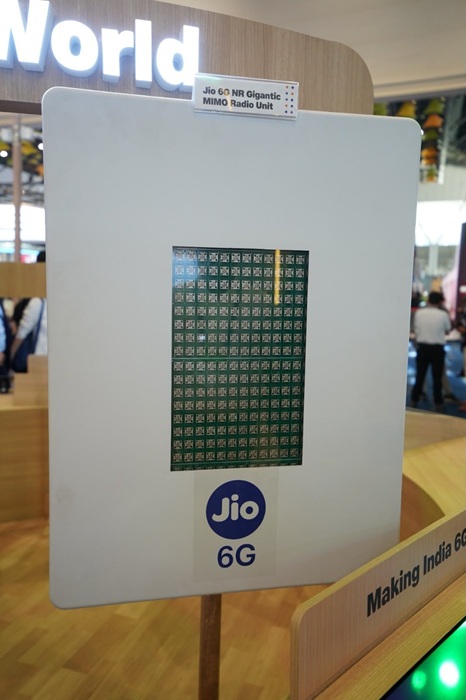
Giga MIMO Radio | Pre-6G Stack | Common 5G and 6G Baseband Unit
One of the key highlights of Jio’s showcase at IMC 2026 is its Giga MIMO Radio, which the company describes as India’s first. Jio has also developed a pre-6G technology stack and unveiled a common baseband unit designed to support both 5G and 6G networks.
These developments form part of the company’s broader effort to prepare for the next generation of mobile connectivity. Jio says it wants India to play an early role in 6G deployment rather than simply adopt technologies developed elsewhere.
Up to 5x Higher Capacity | Nearly 10x Lower Latency
Jio says 6G could substantially increase network capacity while reducing latency to nearly one-tenth of current 5G levels. Higher capacity could allow networks to handle more data and simultaneous users, while lower latency could enable faster responses in applications that require near-real-time communication.
The company also expects data speeds to improve. Together, these developments could support emerging applications such as real-time AI services and holographic video, alongside potential uses in healthcare and education. However, these are projected capabilities, with actual performance dependent on the eventual technology standards and network deployments.
More Than 8,000 Patents | 934+ Contributions to Global Standards
Jio’s 6G strategy also focuses on developing intellectual property and contributing to the global standards that will shape future networks. The company says it has filed more than 8,000 patents, including hundreds related to 6G, and has made over 934 contributions to global standards.
The company aims to establish a stronger presence across four areas: hardware, software, patents, and global standards. Its objective is not limited to deploying 6G services in India but also includes contributing to the technology and specifications used internationally.
AI-Native and Quantum-Safe Networks
Jio expects 6G to make AI-powered services more responsive, particularly in scenarios where quick access to information is important. At IMC 2026, the company highlighted potential applications for farmers, doctors, and students.
Alongside its 6G work, Jio is pursuing AI-native and quantum-safe networks, aiming to combine more responsive connectivity with stronger security. These are part of its longer-term vision for networks designed to support increasingly intelligent and connected services.
India’s 6G Ambitions
Jio’s presentation at IMC 2026 is built around two themes: “India’s 6G in the Making” and “From India to the World.” The company says its existing pre-6G development, radio technology, patent portfolio, and standards contributions could help position India among the early countries to introduce 6G.
The proposed 2030 timeline remains tied to the finalization of global 6G standards. Until then, Jio’s current developments represent preparation for the next generation of connectivity rather than a confirmed commercial rollout date.