
Add MobiGyaan as a preferred source on GoogleAnthropic has announced the release of Claude Opus 4.7, introducing significant improvements in advanced coding, AI agent workflows, and multimodal capabilities. The model is now generally available across Claude apps, APIs, and major cloud platforms, positioning itself as a stronger upgrade over Opus 4.6 for professional and enterprise use cases.

Focus on Long-Running Workflows & Structured Reasoning
Claude Opus 4.7 is designed for complex, multi-step tasks that require:
- High accuracy
- Consistent reasoning
- Long-context memory handling
The model improves instruction following, self-verification before outputs, and memory usage across sessions. This allows it to handle long-running AI agent tasks with reduced supervision.
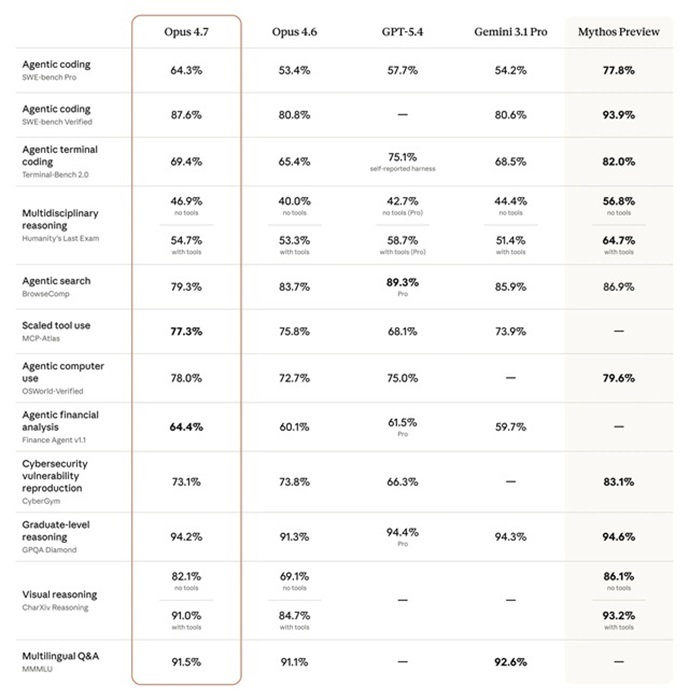
Major Improvements in Coding & Knowledge Work
Advanced coding capabilities
- Significant gains in software engineering tasks
- Better debugging, architecture understanding, and code generation
- New
/ultrareviewcommand for deep code analysis
AI agent performance
- Improved handling of multi-step workflows
- Better decision-making in long tasks with Auto mode enhancements
- Reduced need for repeated context
Enterprise and professional use
- Stronger performance in finance, fegal, and business analysis
- Improved results on Finance Agent and GDPval-AA benchmarks
Enhanced Multimodal & Visual Understanding
Claude Opus 4.7 introduces improved vision capabilities:
- Supports images up to 2,576 pixels (~3.75MP)
- Better interpretation of dense screenshots, UI layouts, and charts and diagrams
This also improves output quality for UI design, presentations, and professional documents.
New Developer Tools & Controls
Anthropic has introduced several new tools for developers. Key additions include:
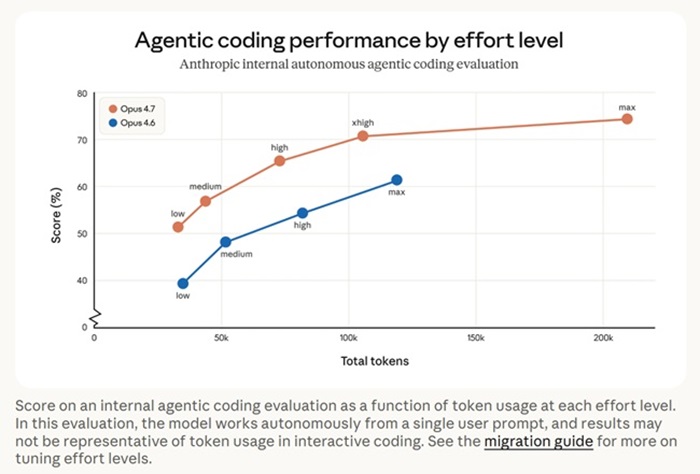
- xhigh effort mode: Balances performance and latency
- Task budgets (beta): Controls token usage in long workflows
- Improved Claude Code defaults: Higher reasoning effort
- Auto mode upgrades: Smarter permission handling
These updates aim to give developers more control over cost, performance, and output depth.
Safety & Alignment Updates
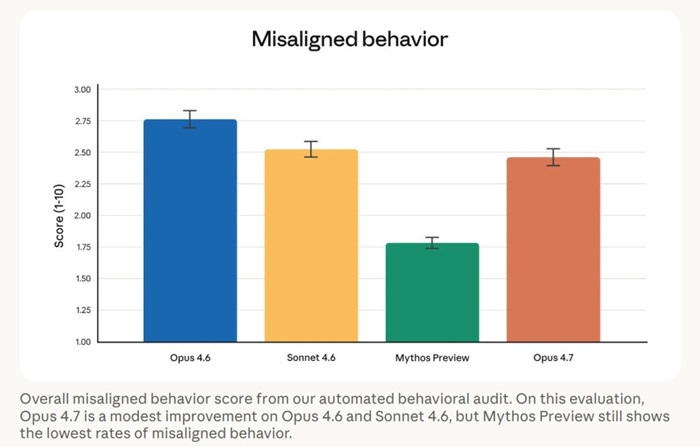
Claude Opus 4.7 maintains a safety profile similar to its predecessor, with targeted improvements:
- Better prompt injection resistance
- Improved response honesty
- Safeguards for high-risk cybersecurity queries
Anthropic notes:
- Slight regression in overly detailed harm-reduction responses
- Lower cybersecurity capability compared to Claude Mythos Preview
Security professionals can access advanced capabilities via the Cyber Verification Program.
Migration Considerations for Developers
Developers upgrading from Opus 4.6 should note:
- Updated tokenizer may increase usage by 1.0 – 1.35x
- Higher reasoning effort leads to more detailed outputs and increased token consumption
Optimization options:
- Adjust effort levels (including xhigh)
- Use API task budgets
- Apply concise prompting strategies
Anthropic recommends testing real workloads before full migration.
Pricing & Availability
Claude Opus 4.7 is available across Claude apps, Claude API (claude-opus-4-7), Amazon Bedrock, Google Cloud Vertex AI, and Microsoft Foundry.
Pricing (unchanged):
- $5 per million input tokens
- $25 per million output tokens

