
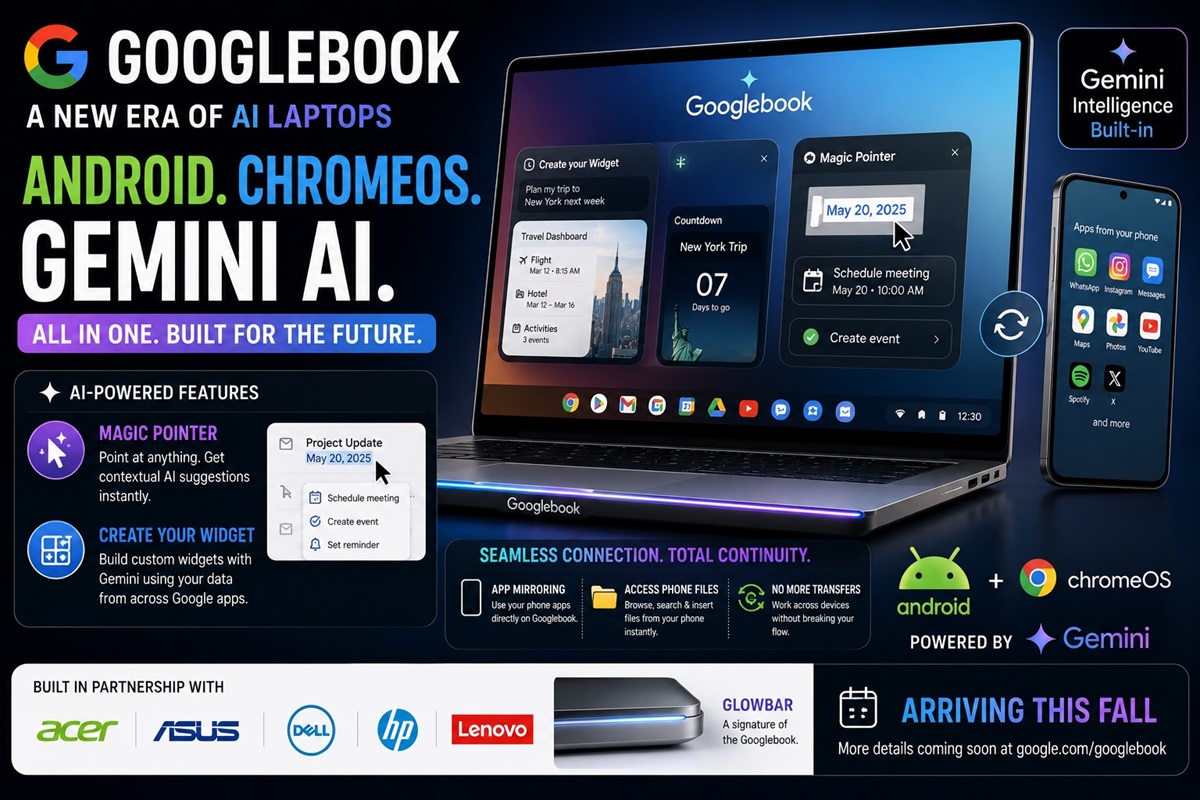
Add MobiGyaan as a preferred source on GoogleGoogle has officially announced the upcoming launch of the “Googlebook,” introducing a new category of AI-focused laptops designed to combine Android, ChromeOS, and Gemini Intelligence into a single computing platform.

More than 15 years after the launch of the Chromebook, Google says the Googlebook represents a major evolution of its laptop strategy by moving beyond traditional operating systems and placing AI at the center of the user experience.
The new platform merges Android application support through Google Play with the lightweight browsing environment of ChromeOS, while deeply integrating Gemini AI features directly into system-level interactions.
Gemini Intelligence at the Core of Googlebook
One of the biggest highlights of the Googlebook platform is its built-in Gemini Intelligence integration, designed to provide contextual and proactive AI assistance throughout the operating system.
Google introduced two key Gemini-powered features during the announcement:
Magic Pointer
Developed alongside Google DeepMind, Magic Pointer transforms the traditional cursor into an AI-assisted interaction tool.
Users can point at content on-screen to receive contextual suggestions and actions powered by Gemini AI.
Example use cases include:
- Pointing at a date in an email to instantly create a calendar event
- Selecting multiple images to generate a combined AI-created visual
- Receiving contextual recommendations based on highlighted content
Google says the feature is designed to make desktop interactions more intelligent and workflow-focused.
Create Your Widget
Another major feature is “Create your Widget,” which allows users to generate personalized desktop widgets using natural language prompts.
Gemini can automatically collect and organize information from web searches and connected Google Workspace apps such as Gmail, Calendar, and Docs into a unified dashboard widget.
For example, users can create:
- Travel dashboards with flight and hotel details
- Productivity widgets with schedules and reminders
- AI-generated information panels based on custom prompts
Android Ecosystem & Cross-Device Integration
Because Googlebook is partially built on the Android technology stack, Google is heavily focusing on cross-device continuity between Android smartphones and Googlebook laptops. Key features include:
- Smartphone App Mirroring: Users can access and control Android smartphone apps directly from the Googlebook interface without needing to switch devices. This allows messaging apps, productivity tools, and mobile workflows to continue seamlessly on the laptop.
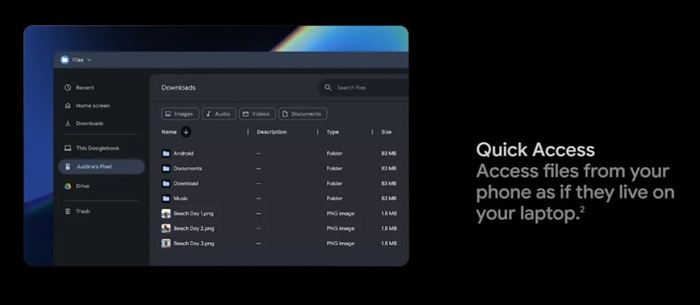
- Direct Smartphone File Access: The built-in file browser can directly access files stored on a connected Android smartphone. Google says users will be able to search phone files directly from the laptop, drag and insert files into apps instantly, and avoid manual file transfer processes.
Hardware Partners & Design
Google confirmed that multiple hardware manufacturers are already working on Googlebook devices. Confirmed partners include Acer, ASUS, Dell, HP, and Lenovo.
According to Google, the upcoming devices will feature premium construction materials and will launch in multiple form factors. A unique hardware element called the “Glowbar” will serve as a visual identifier for Googlebook devices.

Googlebook Availability
Google says additional details about the Googlebook platform and hardware lineup will be revealed through the product’s official channels in the coming months. The first Googlebook consumer devices are expected to launch globally during the fall season.

