
Add MobiGyaan as a preferred source on GoogleYouTube has announced a major update to its AI disclosure system, introducing more visible labels for AI-generated content across videos and Shorts while also expanding automatic AI content detection capabilities on the platform. The company says the changes are designed to improve transparency for viewers while simplifying disclosure requirements for creators using generative AI tools.

YouTube originally introduced AI disclosure labels in 2024, requiring creators to identify when realistic AI-generated or AI-altered content was used in their videos. According to the platform, user feedback indicated that viewers wanted AI disclosures to be easier to notice and more clearly positioned during playback.
As part of the update, YouTube is now repositioning AI disclosure labels for photorealistic and meaningfully AI-generated or AI-modified content.
For standard long-form videos, disclosure labels will now appear directly below the video player and above the description section, making them significantly more visible without requiring users to expand additional menus.
On Shorts, YouTube will display AI disclosure labels directly as overlays on the video itself. The company says this will become the default disclosure format for realistic AI-generated or heavily AI-modified content across the platform.
Meanwhile, videos containing unrealistic, animated, stylized, or only lightly modified AI content will continue showing disclosures inside the expanded description section instead of the main interface.
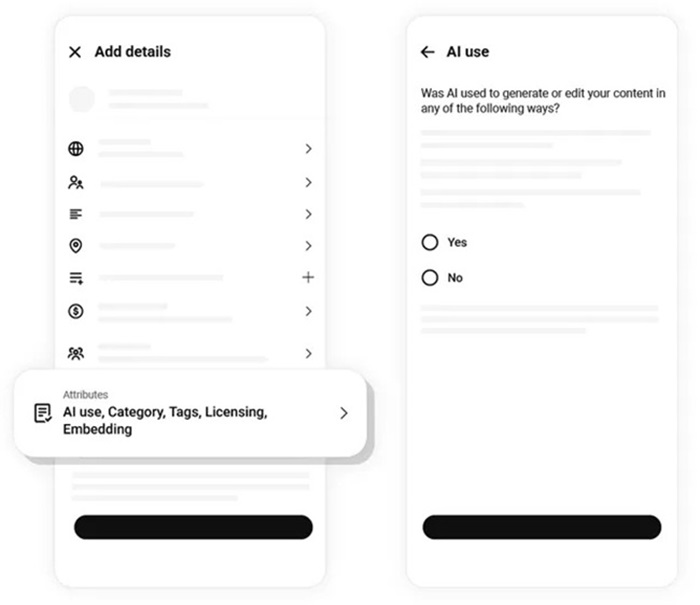
In addition to the redesigned labels, YouTube is also introducing new internal AI-detection systems capable of identifying significant photorealistic AI-generated material automatically.
Although creators are still expected to manually disclose AI-generated content, YouTube says its systems can now apply labels automatically if major AI-generated material is detected without proper disclosure from the uploader.
The company clarified that creators will continue retaining control over disclosure settings in most situations. If a video is incorrectly identified as AI-generated, creators can manually update or appeal the disclosure status through YouTube Studio.
However, YouTube says disclosure labels will become permanent in certain scenarios, particularly for content generated using YouTube’s own AI tools such as Veo or Dream Screen, as well as videos containing C2PA metadata indicating fully AI-generated origins.
YouTube also emphasized that AI disclosure labels themselves will not negatively impact monetization eligibility or recommendation visibility on the platform. According to the company, the update is focused on improving viewer awareness and platform transparency rather than restricting AI-assisted creators.
The updated AI disclosure placement system for both long-form videos and Shorts is currently rolling out globally. YouTube confirmed that its automatic AI-generated content detection and auto-labeling systems will begin rolling out gradually starting from May 2026.

