Add MobiGyaan as a preferred source on GoogleOpenAI has announced that Deep research in ChatGPT is now powered by GPT-5.2, bringing expanded controls over research workflows along with richer output, visualization, and review capabilities.

First introduced last year, Deep research is an agentic feature inside ChatGPT designed to handle complex, multi-step internet research tasks. The latest update enhances how users guide the research process and how results are generated and presented – without leaving the chat interface.
Expanded Research Controls and Custom Outputs
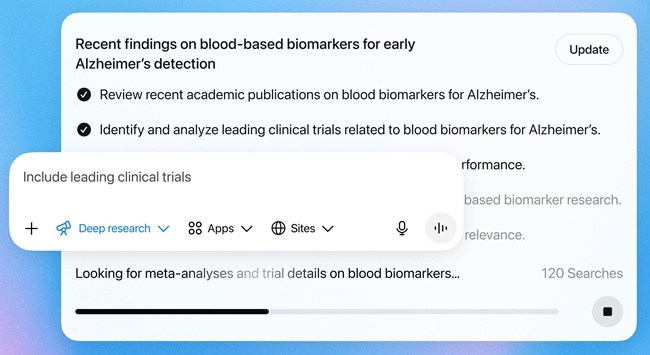
With GPT-5.2 integration, Deep research gives users finer control over both how information is gathered and how results are delivered. Users can now:
- Connect supported apps within ChatGPT and search specific websites
- Restrict research to selected domains or defined time ranges
- Apply filters and comparison parameters
- Track research progress in real time
Users can also interrupt an active research session to add follow-up questions or introduce new sources – making the workflow more interactive and iterative.
On the output side, Deep research supports:
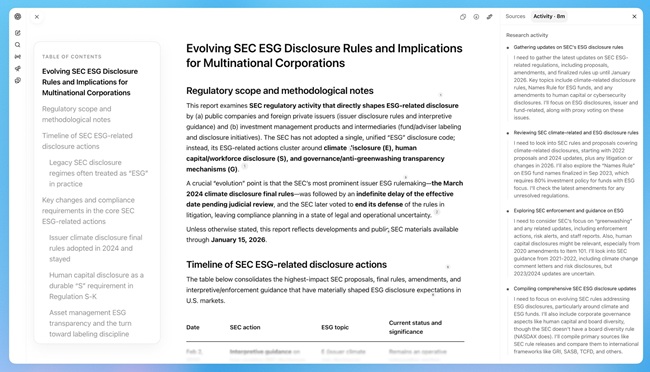
- Structured reports and tables
- Charts and visual data summaries
- Fullscreen report mode for focused review
These tools allow users to customize both depth and presentation, adapting results for analysis, sharing, or decision-making.

Structured Reporting and Transparency
Deep research now produces integrated reports that blend analysis with documentation. Depending on the task, reports can include:
- Key findings and summarized insights
- Visual comparisons and trend charts
- Methodology explanations detailing how results were compiled
- Commentary sections for added context
- Source citations for verification
All reports remain embedded within the chat, allowing users to review, refine, and export results directly in ChatGPT.
Availability
The GPT-5.2–powered Deep research update is rolling out starting today, with expanded controls and reporting features becoming available as the deployment progresses.